 Consultation
now
Consultation
now



-
Arishtas & Asavaas
-
Wellness
-
Food Supplements
-
Choornam
-
Combo Pack








My Cart (0)




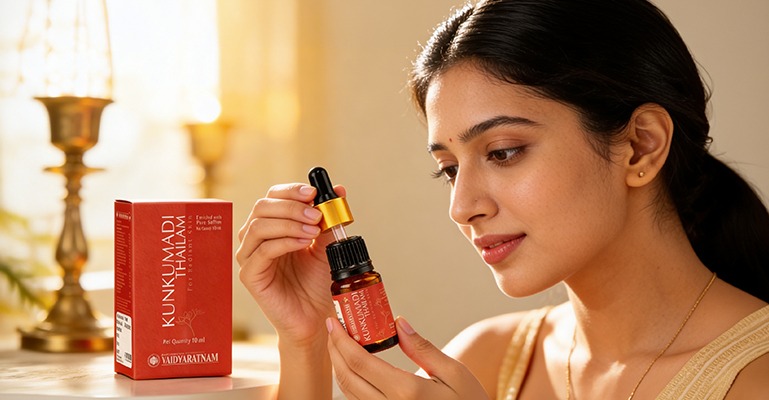
Kunkumadi Thailam: Benefits, Uses, Ingredients & How to Use for Glowing Skin
20 February 2026
Introduction
There's something quietly luxurious about a skincare ritual that has been passed down through generations. Kunkumadi oil is one of those rare formulations that has stood the test of time, not because of clever marketing, but because people kept coming back to it. Rooted in traditional Indian herbal skincare, this saffron-infused facial oil has earned its place on vanity tables across the country, and increasingly, around the world.
What makes kunkumadi oil so special? It combines the brightening properties of saffron with a carefully chosen blend of botanical extracts, all suspended in a nourishing oil base that the skin absorbs slowly and steadily. Whether you've heard of it from your grandmother or stumbled across it while researching natural glow remedies, this article will walk you through everything: benefits, ingredients, how to use it correctly, and what results to realistically expect.
Explore our kunkumadi Tailam →
What is Kunkumadi Thailam/Oil?
kunkumadi oil, also called kunkumadi tailam is a traditional herbal facial oil whose origins lie in classical Indian botanical knowledge. The word "kumkuma" refers to saffron, which is the defining ingredient in this formulation. The rest of the blend typically includes a thoughtfully chosen range of herbal extracts carried in a natural oil base that helps deliver those botanicals to the skin surface.
Unlike modern serums that rely on synthetic actives, kunkumadi tailam works through the synergy of natural ingredients that have long been associated with supporting a brighter, more even-looking complexion. It is not a medicine, think of it as a premium herbal facial oil designed to support skin tone, luminosity, and texture when used as part of a consistent skincare routine.
It has remained popular in Indian skincare for good reason: the ingredients come from nature, the formulation feels time-tested, and the results while gradual feel genuinely rewarding when you commit to it.
Top Kunkumadi Oil Benefits for Skin
Helps Improve the Appearance of Dark Spots
One of the most talked-about kunkumadi oil benefits is its ability to visibly improve the look of dark spots and uneven patches over time. Saffron, in particular, has long been associated with supporting a more uniform skin tone. With regular use, the appearance of post-blemish marks and areas of discolouration can look less prominent, giving the skin a more consistent and polished finish.
Supports Brighter-Looking Skin
If your skin has been looking dull or tired, the kind of flatness that comes from stress, pollution, or disrupted sleep, kunkumadi tailam is formulated to support a visibly brighter appearance. The botanical extracts in the blend work together to help the skin surface look more radiant and refreshed with consistent use.
Nourishes Dry and Dull Skin
The oil base in kunkumadi tailam acts as an excellent emollient. It helps soften the skin, reduce the feeling of tightness, and restore a healthy suppleness that dry skin often lacks. If your complexion tends to look flat or feel parched by mid-afternoon, the nourishing quality of this oil can make a real difference in how your skin both feels and appears.
Enhances Natural Glow
There is a specific kind of glow that does not come from a highlighter, it comes from well-nourished, even-toned skin that reflects light naturally. kunkumadi oil for face is designed to support exactly that. Over weeks of consistent use, skin tends to develop a quiet luminosity that looks healthy rather than heavy.
Supports Smoother-Looking Texture
Rough patches, visible pores, and uneven skin texture are common concerns, especially for those with combination or dehydrated skin. The herbal extracts in kunkumadi tailam help support a smoother surface appearance, which also means that makeup, if you use it, tends to sit more evenly and look more refined.
View Vaidyaratnam’s kunkumadi Tailam formulation →
Kumkumadi Thailam Uses
Kunkumadi tailam is more versatile than many people realise. Here are the most effective ways it can fit into a real, everyday skincare routine:
Daily night skincare routine: The most popular and effective use. Apply it as the last step of your evening routine so it can work while your skin goes through its natural overnight renewal process.
For dry or uneven skin tone: If your skin tone appears patchy or lacks consistency in texture, using it three to four nights a week as a dedicated treatment layer can show gradual, meaningful improvement over time.
Kunkumadi Thailam Ingredients Explained
Understanding what is actually inside your skincare product is the best way to know whether it suits your skin, and whether the brand behind it is being transparent with you.
Saffron (Kumkuma)
Saffron is the defining ingredient, and the reason this oil carries the name it does. It contains naturally occurring compounds that have been associated with supporting a more radiant and even-looking complexion. Saffron has been used in traditional Indian beauty practices for centuries, and its continued relevance in modern herbal skincare is a testament to how well it works. The quality and quantity of saffron used in a formulation directly affects how effective the final product is, which is why not all kunkumadi oils are created equal.
Herbal Extracts
A well-crafted kunkumadi tailam includes a range of complementary botanical extracts, commonly sandalwood, lotus, vetiver, and other plant-based ingredients that have been associated with skin-supporting properties for generations. Sandalwood is valued for its soothing quality and its ability to support an even-looking tone. Lotus extracts are associated with a brightening effect on the skin surface. Vetiver contributes a grounding, skin-nourishing quality that works well alongside the other botanicals in the blend.
The specific combination of herbs and how they are sourced and prepared varies between brands, which is why kunkumadi tailam ingredients deserve careful attention when you are comparing products.
Natural Oil Base
The carrier oil base in traditional formulations is typically sesame oil, lightweight enough for facial use, rich in fatty acids, and effective at carrying herbal extracts toward the skin surface. It also has its own moisturising properties, meaning the base itself is beneficial rather than just a vehicle for other ingredients. A well-chosen oil base makes the difference between a product that absorbs beautifully and one that sits heavy on the skin.
How to Use Kunkumadi Thailam Properly
Getting results from kunkumadi oil is largely about correct application and consistency. Here is a clear, step-by-step guide:
- Cleanse your face thoroughly. Start with a gentle cleanser that removes makeup, sunscreen, and the day's pollutants. Pat dry with a soft cloth.
- Take 3–5 drops of kunkumadi tailam onto your palm. Warm it gently between your fingers for a few seconds before applying.
- Press and massage it into the skin using upward, circular motions. Pay particular attention to areas of concern: dark spots, dull patches, uneven tone around the cheeks or forehead.
- Allow it to absorb fully before lying down or applying anything else.
Frequency: Start with three to four nights a week and increase to nightly use once your skin has had a chance to adjust. For sensitive skin, beginning with every other night is the more cautious approach.
Patch test: Before applying to your face, test the oil on the inner arm or behind the ear. Wait 24 hours to check for any reaction, particularly important if your skin tends to respond to new products.
Realistic timeline: Most people begin noticing a change in how their skin looks and feels within four to six weeks of consistent use. Skin renewal is a gradual process, and patience genuinely pays off here.
Kunkumadi Oil Before and After – What to Expect
This is the question most people have before they commit, and it deserves an honest, realistic answer.
Weeks 1–2: Your skin will likely feel more nourished and soft quite quickly. The dryness or tight feeling that appears after cleansing often reduces noticeably. Visible changes to tone are unlikely this early, the oil is still building its effect.
Weeks 3–4: Many users notice a subtle but real improvement in how bright their skin looks, particularly in the morning. The complexion feels more supple, and the overall appearance seems more awake.
Weeks 5–8: This is typically when kunkumadi oil before and after differences become more visible to others, not just to you. Dark spots may appear less prominent, the skin tone looks more balanced, and there is a natural luminosity that feels earned rather than applied.
Beyond 8 weeks: With continued use, the cumulative benefit becomes more apparent. Texture tends to look smoother, tone more consistent, and the overall complexion more settled and even.
The truth about kunkumadi tailam is that it rewards patience and consistency above all else. Those who commit to at least 60 days of regular use tend to see the most meaningful, lasting results.
How to Choose the Best Kunkumadi Oil
With many options available today, choosing the right product comes down to a few key factors that separate genuinely effective formulations from those simply riding the trend.
Ingredient quality: Look for products that list saffron prominently and use recognisable, traditionally relevant botanical ingredients. Vague labelling or a very long list of unrecognisable additives is worth questioning.
Manufacturing process: The way herbs are infused into the base oil significantly affects the potency of the final product. Traditional slow-infusion methods, where herbs are processed carefully over time, tend to preserve more of the beneficial properties of each ingredient.
Brand heritage: A brand with decades of experience in herbal formulations is more likely to maintain consistent quality and formulation integrity than one that has recently entered the space to capitalise on growing interest in natural skincare.
Purity: The best kunkumadi oil contains no unnecessary fillers, artificial fragrances, or synthetic additives. Transparency in the ingredient list is one of the clearest signals of a brand's integrity.
At Vaidyaratnam, our kunkumadi Tailam is prepared following classical formulation principles using carefully sourced saffron and a blend of traditional botanicals. With roots going back to 1941, we have spent decades refining the craft of herbal formulation, not chasing trends, but staying true to the knowledge and standards that have always defined our work. Every batch is made with the same attention to ingredient quality and process integrity that we have maintained from the very beginning.
Shop Vaidyaratnam kunkumadi Tailam →
Kunkumadi Thailam Price – What Affects It?
You may have noticed that kunkumadi tailam prices vary considerably from brand to brand. Here is what actually drives that difference:
Quality of saffron: Genuine, high-grade saffron is one of the most expensive natural ingredients in the world. Products using real saffron in meaningful quantities will naturally cost more than those using synthetic alternatives or negligible amounts.
Ingredient sourcing: Ethically sourced, carefully selected botanicals, particularly rarer herbs add to the cost of production in ways that reflect in the final price.
Manufacturing process: Traditional preparation methods that involve slow herb infusion over extended time periods require more skill, time, and care. That craftsmanship is reflected in the price.
Bottle size: Most kunkumadi oil is sold in small quantities commonly 10ml to 30ml, because a little goes a long way when used correctly. A 10ml bottle, used at three to five drops per application, can comfortably last several weeks.
When evaluating kunkumadi tailam price, think in terms of cost-per-use rather than the upfront sticker price. A thoughtfully formulated smaller bottle often delivers significantly better value than a cheaper, larger quantity product of uncertain quality.
Frequently Asked Questions
Can people with oily skin use kunkumadi oil?
Yes, with some adjustment. Use it sparingly, two to three drops is sufficient and apply it only at night. Allow full absorption before sleeping. Many people with oily skin find that once their skin's hydration is better balanced, excess surface oiliness reduces over time.Always take a patch test before use.
How long does it take to see results?
Skin feel improvements often appear within the first two weeks. Visible changes in tone and brightness typically become noticeable between four and eight weeks of consistent, nightly use.
Can men use kunkumadi tailam?
Absolutely. kunkumadi oil for face is not gender-specific in the least. Men dealing with dullness, post-shave marks, or uneven skin tone can benefit just as much from regular use.
Is it suitable for sensitive skin?
Generally yes, but a patch test before facial application is always recommended. Start with every other night rather than daily use, and observe how your skin responds over the first two weeks before increasing frequency.
Can it be used every day?
Once your skin has adjusted, nightly use is appropriate for most skin types. Daytime use is less common since oils can occasionally affect how sunscreen or makeup sits on the skin, but some people do incorporate it into a very light daytime routine with no issues.
Will it make my skin feel greasy?
Not if used correctly. Three to five drops, massaged in properly and given ten minutes to absorb, should leave no heavy residue. The most common reason people experience greasiness is using too much product or not allowing enough absorption time before bed.
Conclusion
Kunkumadi oil earns its reputation quietly, through results rather than noise. Its combination of saffron, time-honoured botanical extracts, and a nourishing natural oil base makes it one of the more thoughtful additions you can make to a skincare routine focused on genuine, lasting glow.
If you are looking for something that connects traditional herbal skincare wisdom with real, visible results and you are willing to give it the consistency it deserves kunkumadi tailam is a worthy commitment. Give it at least six to eight weeks, apply it correctly, and let the formulation do what it has always been designed to do.
Check out Vaidyaratnam kunkumadi Tailam to experience a traditional herbal glow routine crafted with decades of botanical expertise and an unwavering commitment to quality.