 Consultation
now
Consultation
now



-
Arishtas & Asavaas
-
Wellness
-
Food Supplements
-
Choornam
-
Combo Pack








My Cart (0)




How Karkidaka Kanji Supports Seasonal Nourishment During the Rainy Season
16 June 2026
Quick Answer
Karkidaka Kanji (Oushadha Kanji) is a traditional herbal porridge made from Njavara rice, green gram, fenugreek, and Dashamoola herbs. Consumed during the Malayalam month of Karkidakam (mid-July to mid-August), it supports the body by rekindling the digestive fire (Jataragni), strengthening natural immunity, aiding detoxification, and providing gentle, sustained nourishment during the monsoon, when the body is most vulnerable to fatigue and seasonal illness. It is suitable for all age groups and is one of the most time-tested seasonal wellness practices in Kerala, Ayurveda.
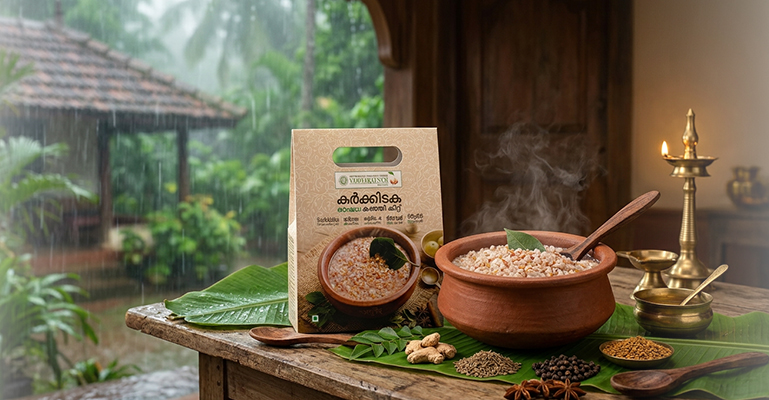
If you've grown up in Kerala or have roots in the state, the arrival of the monsoon brings with it a very particular smell, wet earth, drumstick leaves swaying in the wind, and from the kitchen, the warm, earthy aroma of kanji simmering on the stove. This isn't just any porridge. This is Karkidaka Kanji, and for centuries, it has been the way Kerala nourishes itself through the most demanding month of the year.
Let's talk about why this humble bowl of herbal rice gruel has stood the test of time, and why it still matters today.
What Is Karkidakam, and Why Does the Body Struggle During This Season?
Karkidakam is the last month of the Malayalam calendar, falling roughly between mid-July and mid-August. It sits at the heart of the Southwest monsoon, when Kerala receives the heaviest rainfall of the year.
It's a beautiful time. But it's also a physically challenging one.
Traditiona lsystem has always observed that the human body doesn't respond to all seasons equally. During Karkidakam, the constant rain, drop in sunlight, high humidity, and temperature fluctuations create conditions that aggravate Vata dosha and weaken Jataragni, the digestive fire that keeps the body energized and protected. When Jataragni weakens, digestion slows, appetite becomes unpredictable, fatigue creeps in, and the body becomes more vulnerable to seasonal illness.
This isn't just an ancient theory. Anyone who has felt unusually sluggish, bloated, or rundown during the rainy season has experienced exactly this.
Karkidakam, in the traditional Kerala household, was a time of conscious rest, healing, and nourishment. And at the center of that nourishment was the Oushadha Kanji.
So, What Exactly Is Karkidaka Kanji?
Karkidaka Kanji, also called Oushadha Kanji or herbal gruel, is a specially prepared medicinal porridge made from Njavara rice, green gram, fenugreek, and a blend of medicated herbs. The word oushadha itself means medicine, which tells you everything about how this food was viewed: not merely as nourishment, but as seasonal healing in a bowl.
The herbs used in the preparation are not chosen randomly. They follow traditional principles, particularly the use of Dashamoola (a group of ten roots), digestive spices, and herbs known to support immunity and metabolic health. The result is a warm, mildly spiced porridge that is gentle on the stomach, easy to digest, deeply nourishing, and traditionally consumed with coconut milk and induppu.
The kanji works on multiple levels simultaneously; it stokes the digestive fire, clears accumulated toxins, supports the immune response, and replenishes the body's energy reserves.
Why the Rainy Season Specifically Calls for This Kind of Food
During the monsoon, the digestive system is naturally working at a lower capacity. Heavy, oily, or complex foods can overwhelm it. What the body genuinely craves, even if we don't always listen, is something warm, light, and healing. Karkidaka Kanji fits this need almost perfectly.
The Njavara rice used in the kanji is a medicinal variety native to Kerala, known for being highly digestible and nourishing. The green gram adds protein without burdening digestion. Fenugreek gently warms the system and helps regulate blood sugar. The herbal decoction base does the heavy lifting, working quietly to restore balance in the gut and support the body's natural defense mechanisms.
Consumed regularly during Karkidakam, this porridge is essentially a reset, a gentle, consistent act of caring for your body during the season when it needs it most.
The Key Benefits of Karkidaka Kanji
Supports Digestive Vitality
Weak digestion is the root cause of many seasonal complaints, bloating, heaviness, poor appetite, and fatigue. The combination of herbs in Oushadha Kanji, especially the digestive spices like ginger, pepper, cumin, and cardamom, gently rekindles the digestive fire and helps the gut function smoothly.
Strengthens Natural Immunity
The monsoon season is when infections, cold, cough, and viral illnesses tend to peak. The Dashamoola roots and other herbs in the kanji blend are traditionally used to fortify the body's natural immunity, not as a quick fix, but as a steady, sustained support over the course of the month.
Promotes Healthy Cholesterol Balance
Several herbs in the classical Oushadha Kanji formulation, including fenugreek and certain roots from the Dashamoola group, have traditionally been associated with supporting healthy lipid metabolism. When taken as part of a balanced diet, the kanji can contribute to overall cardiovascular wellness.
Diabetic-Friendly Nutrition
Fenugreek, green gram, and Njavara rice make this a naturally low-glycemic meacompared to normal meal. It's gentle on blood sugar levels and provides sustained energy without spikes, making it a thoughtful choice for those managing diabetes or simply trying to eat more mindfully.
Aids Natural Detoxification
Karkidakam is traditionally considered the best time for internal cleansing. The body, after months of heat and exertion, is ready to release accumulated impurities. The herbs in the kanji blend support this natural detox process, helping the body clear ama (metabolic waste) and emerge from the monsoon feeling lighter and more energized.
A Tradition That Almost Got Lost, and Why It's Coming Back
For a few decades, the practice of making Karkidaka Kanji at home declined. Younger generations moved to cities; traditional knowledge wasn't always passed down, and the ingredients, particularly the Dashamoola kizhi and authentic herbal blends, became harder to source.
But something has shifted in recent years. There is a genuine, growing hunger for practices that are rooted, seasonal, and real. People are tired of wellness that comes in flashy packaging with ingredients they can't pronounce. They want something that their grandmothers trust. Something that has context and history.
Karkidaka Kanji is having a well-deserved revival, and it's not nostalgia driving it, it's wisdom.
How to Prepare Karkidaka Kanji the Traditional Way
The preparation is simple but intentional. Here is the classical method:
- The night before, soak 5g green gram and 2g fenugreek in water.
- The next morning, make a kizhi (herbal pouch) with 14g Dashamoola and boil it in 1 litre of water to prepare a decoction.
- Remove the kizhi, then add 45g Njavara rice along with the soaked green gram and fenugreek to the decoction.
- At the half-boiled stage, add 4g of Karkidaka Kanji powder.
- Continue boiling with sufficient water until the rice is fully cooked.
- Finally, add induppu (Himalayan rock salt) and coconut milk to taste.
- Serve hot and eat mindfully.
The warmth, the aroma, the slightly earthy-spiced flavor, is comforting in a way that feels almost medicinal. Because it is.
Vaidyaratnam's Karkidaka Oushadha Kanji, Authentic, Accessible, and Ready to Prepare
For those who want to follow this tradition without the challenge of sourcing individual ingredients, Vaidyaratnam, one of Kerala's most trusted Ashtavaidya institutions, offers two thoughtfully prepared options.
The Vaidyaratnam Oushadha Kanji Choornam is the herbal powder blend, crafted from authentic Ayurvedic herbs including all ten Dashamoola roots, digestive spices, and other classical ingredients.
For a more complete, ready-to-cook experience, the Vaidyaratnam Karkidaka Oushadha Kanji Kit includes everything you need, the Dashamoola kizhi and the herbal powder, in one kit. It removes the guesswork and the sourcing effort, so you can focus on the ritual itself.
Who Should Have Karkidaka Kanji?
Almost everyone. Traditionally, Karkidaka Kanji was consumed by the entire household, children, elders, and adults. It isn't medicine reserved for the unwell. It's a seasonal food meant to prevent weakness and support the body proactively.
That said, if you have a specific health condition or are on medication, it's always wise to check with a healthcare professional before adding any herbal preparation to your routine.
One Bowl, One Month, One Tradition Worth Keeping
Karkidakam doesn't last forever. It comes, brings its rains and its challenges, and passes. But the practice of observing it, of slowing down, eating mindfully, and giving the body what it actually needs, is something worth holding onto.
In a world full of wellness fads and complicated protocols, there is something profoundly grounding about a bowl of warm herbal rice porridge, made from a recipe that hasn't changed in centuries.
This Karkidakam, let the kanji do what it has always done. Nourish. Heal. Restore.